There was a time when I genuinely believed the best trip automatically meant the most famous address. Full stop. If I was flying to Italy, it had to be Rome or Milan. France meant Paris. Spain meant Barcelona. Popular meant important, and important meant better. And listen, it wasn’t something I consciously interrogated, right? It was simply how travel worked in my head. I was, in retrospect, a bit of a travel sheep. And honestly? A slightly smug one. I see that now.
Anyway.
For years, I followed that instinct without hesitation. I queued where everyone queued. And I stood where everyone stood. I took the photographs I had already seen a thousand times online because it felt like proof that I had done the trip properly. Look, here I am, existing in the correct location. Validation achieved. And yet, what I didn’t expect was the strange aftertaste that sometimes followed — the quiet sense that I had witnessed something spectacular and somehow remained untouched by it. You know that feeling? Like shaking hands with a celebrity who was already looking past you for someone more important.
Let me say this clearly though: I still love popular destinations like Paris and Milan. I always will. Obviously, there is a reason they are iconic. They are layered, dramatic, and undeniably beautiful. But loving them and believing they are the only places worth prioritising are two very different things. That’s the distinction, right? One is appreciation. The other is a kind of tourism FOMO that travel influencers have cunningly monetised for years. But that’s a separate rant.
For a long time, most of us have confused the two. I certainly did.
We have equated visibility with value. We have assumed that if a city dominates postcards, travel guides and social feeds, then it must contain the entire story of that country. And if we skip it, even once, we risk missing something essential. Which is funny when you think about it, because missing something essential is exactly what happens when you’re too busy documenting it to actually notice it. The thing is, I didn’t realise that then.
I remember exactly when that assumption began to crack. Rome, 2016. August. And by the way, if you’ve never experienced Rome in August, let me paint you a picture. It’s the kind of Roman heat that doesn’t simply warm the air but presses down on it, thick and unrelenting, turning marble into a reflector and skin into something constantly aware of itself. The kind of heat that makes you question every life choice that led you to stand in a giant stone basin’s vicinity with three thousand other people who also thought August in Rome was a brilliant idea. Anyway. I digress.
By the time I reached the Trevi Fountain, the stone was glowing beneath the sun, the water impossibly blue against the white sculpture. It was everything I had imagined — ornate, dramatic, unapologetically grand. Anita Ekberg would have looked magnificent here. I, on the other hand, looked like someone slowly melting into their own clothing. That’s the truth.
And yet, instead of stillness, there was compression. Arms raised high with phones. Voices overlapping in half a dozen languages. Tour guides cutting through the noise. The metallic scent of coins mixing with sunscreen and sweat. There was no breeze — only the collective heat of bodies standing too close for too long. I considered throwing a coin in. Then I realised I’d probably hit someone. So I didn’t.
The fountain was breathtaking. But the moment felt frantic. You could feel it in the air.
I tried to step back to take it in properly, but there was nowhere to step. Literally nowhere. Every angle was claimed. Every pause interrupted. Awe had become competitive. And I was losing. That’s the thing about competitive awe — someone always loses.
Later that afternoon, climbing toward the Spanish Steps, the marble radiated the heat it had absorbed all day. People sat shoulder to shoulder, fanning themselves, angling for photographs, negotiating space as though it were limited currency. And I suppose it was. From a distance, it looked cinematic — Rome at golden hour, that soft honey light settling across stone. But standing within it, I felt less like a traveller and more like part of a tide. A slightly sweaty, mildly irritated tide. That’s not how you want to feel in Rome.
Read More: Is Visiting Venice Worth It Anymore? Here’s What I Honestly Think
I remember pausing halfway up the steps and realising I wasn’t absorbing anything. I was managing it — managing the crowd, managing the noise, managing my own irritation at feeling irritated. And then I had this thought: I had spent good money to travel thousands of miles and was now essentially working a middle-management role in my own holiday. Honestly. It was ridiculous.
That evening, walking back through the city as dusk softened the sky, I felt something I couldn’t quite articulate. Not disappointment exactly. Disorientation. Because I didn’t hate Rome. That’s the thing — I didn’t hate it at all. I hated the friction. The constant, low-grade friction of being where everyone else also needed to be.
And quietly, without drama, the question shifted.
Instead of asking what the most famous city was, I began wondering what might happen if I stepped slightly to the side of it. What if the best move wasn’t the obvious one? What if the sheep had it backwards? That question stayed with me.
What You Actually Find When You Skip the Most Popular Destination
Here is the irony. And I love this part.
I live in London now, and would you believe I still haven’t been to Paris? It sits less than three hours away by train, right? Less than three hours. And yet every time I suggest to Franco that we should finally go, his response is always slightly restrained. He went years ago, long before we met, and whenever Paris comes up he shrugs and says it was beautiful but overwhelmingly crowded, intense, exhausting in a way that dulled the magic. He describes it the way people describe a relationship that looked perfect on paper but left them depleted. And I get that now. I didn’t then, but I do now.
At first, I resisted that idea. How could Paris be optional? How could you live this close and not prioritise it? Wasn’t there a law? A treaty? Some clause in the Geneva Convention about mandatory Paris visits if resident within certain European proximity? That’s genuinely how it felt.
But the more I’ve sat with that hesitation, the more I’ve realised it might not be indifference — it might be instinct. That’s the thing about instinct. It’s quiet. It doesn’t shout.
I haven’t ruled Paris out. I probably never will. Obviously. But increasingly, when we talk about weekend trips, our conversations drift elsewhere. Lyon. Strasbourg. Smaller French cities where the architecture still stuns but the tempo softens. Where we can arrive without stepping into a performance already in full swing. Where no one is trying to sell us a selfie stick. That last one matters more than you’d think.

By the way, when a friend of mine first took the train from Paris to Lyon, she described it in a way that stayed with me. She said it felt like Paris had exhaled. Isn’t that good? The grandeur was still there, the food arguably better, the streets handsome and self-assured — but the pressure had lifted. She spoke about sitting in a small bouchon where the owner recommended wine without glancing at a watch, where no one seemed in a hurry to turn tables. Where the goal wasn’t throughput. It was lunch. That’s the whole difference right there.
That idea of room — physical, emotional, psychological — is what second city travel has come to mean for me. Space to simply be, without performing tourism for an audience of strangers. That’s the quiet luxury part, I think.
Read More: Why Multigenerational Family Travel Is the Shift More Families Are Embracing as They Plan for 2026
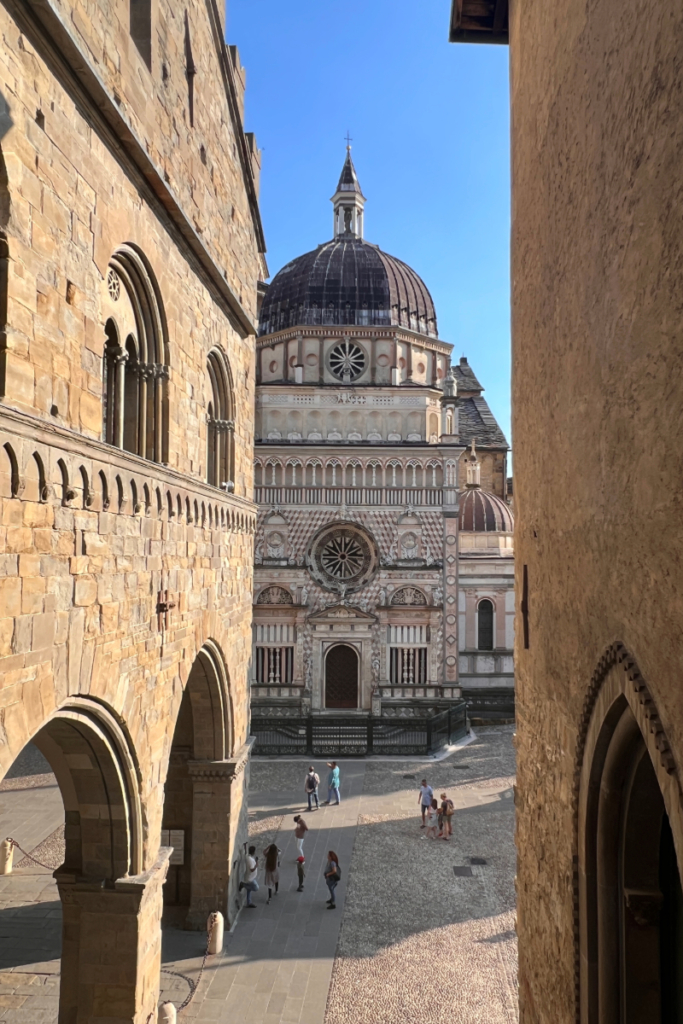
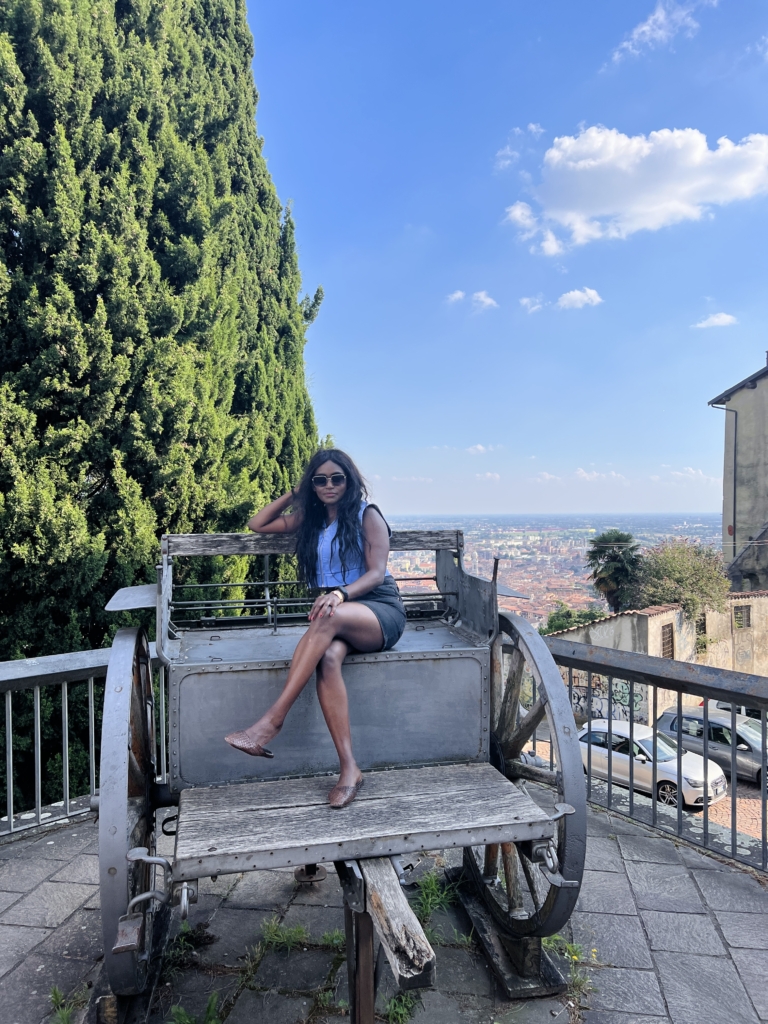
Anyway. A couple of years ago, Franco and I visited Bergamo instead of staying in Milan. And look, Milan is magnetic, polished, fast. It moves with intent. No question. Bergamo, by contrast, unfolds slowly. In the Città Alta, we wandered cobbled streets without navigating crowds. We sat in a quiet piazza as the afternoon light softened against stone walls and realised no one was rushing us along. No one was checking watches. No one was trying to get the shot before the next tour group arrived. It was just… there. And so were we.
In Milan, the energy is electric, but it demands stamina. That’s the trade-off. In Bergamo, the city seemed content to let us simply exist within it. We weren’t missing Milan. Milan was missing us, and honestly? It seemed fine. It was managing. That thought made me laugh at the time.
That difference is subtle, but it changes everything. I mean that.
Second city travel is not about rejecting the headline destination. That’s important to say. It is about recognising that the better travel experience often lives one step away from it — in alternative European cities that have not yet been compressed by expectation. Cities that haven’t been edited down to a highlights reel. That haven’t been Instagrammed into oblivion. That still have room.
Why Second City Travel Feels Like Quiet Luxury
Conversations around overtourism in Europe are no longer abstract, right? They’re everywhere now. Cities like Venice and Barcelona are navigating visitor caps, rising prices and the strain of constant visibility. The most popular destinations remain extraordinary, but they are also burdened. They are beautiful people at a party who are exhausted by the attention but can’t figure out how to leave. That metaphor works, I think.
Second cities, for now at least, feel lighter. And by lighter, I mean everything.
In Valencia, paella tastes are anchored in daily life rather than engineered for turnover. And in Utrecht, canals feel like part of a functioning city rather than a backdrop you’re supposed to photograph. In Trieste, an espresso in the main piazza costs what it should, and you drink it sitting down, unhurried. No one hands it to you in a paper cup with your name misspelt on the side. That alone is a kind of luxury.
This is why second city travel aligns so naturally with quiet luxury travel. Not the flashy version. The real version — the one rooted in ease, proportion and presence. The version that understands the actual luxury isn’t a private car or a five-star lobby. It’s not having to queue. It’s not feeling like you’re in someone else’s way. It is sitting somewhere and realising you haven’t checked your phone in an hour because there was no need to.
Choosing less crowded destinations is not about being contrarian. That’s the thing people get wrong. It is about being intentional. It’s about understanding that beauty does not diminish one train stop away from the spotlight. It simply breathes differently. It breathes in a way that lets you breathe alongside it. And honestly, isn’t that the whole point?
You don’t fully grasp second city travel until you skip the most popular destination on purpose. Until you resist the reflex to choose the city everyone else is standing in.
Only then do you notice how differently you move. How differently you breathe. How differently you feel. Only then do you realise that the sheep were never going to the good pastures. They were just going where the other sheep were. That’s not the same thing at all.
I still visit the headline cities. I probably always will. And one day, I will take that train to Paris. Franco will come with me, because he loves me. And I will love every minute of it, because it’s Paris, and I’m not immune to beauty just because I’ve become suspicious of crowds. That would be silly.
But I no longer assume that the magic lives exclusively in the most famous address.
More often than not, it is waiting just slightly to the side of it. In a quieter piazza. At a slower table. In a city that hasn’t yet realised it’s supposed to be performing. That hasn’t learned to pose.
And if you ask me, that’s the only address worth chasing. That’s the one.