Kenya has a way of surprising first-time visitors. On a map, the country looks manageable. Yet once you begin planning a journey, you quickly realise how vast the landscapes truly are. Distances that appear small on a screen can translate into hours of travel across savannah plains, escarpments, wildlife reserves, and coastline.
It is also a country of striking contrasts. One morning you might be watching elephants move slowly across the savannah beneath Mount Kilimanjaro. A few days later you could be walking along a quiet stretch of white sand while traditional dhows glide across the turquoise waters of the Indian Ocean.
Which raises one of the most common questions travellers ask when planning their first East African adventure: how many days do you actually need in Kenya? Having grown up there, I have seen many visitors plan their first itineraries — and I have also seen where things often go wrong. The biggest mistake is trying to see too much.
Kenya rewards travellers who slow down. The most memorable moments rarely happen while rushing between destinations. They happen during sunrise game drives, long unhurried lunches overlooking the plains, or quiet evenings when the African sky stretches endlessly above you.

And that is precisely why so many visitors fall in love with it. So if you are planning your first trip, here is a realistic guide to how many days in Kenya you actually need, how to structure your itinerary, and the best way to travel around the country.
If You Only Have 7 Days in Kenya
A week in Kenya can still deliver an unforgettable experience, but the key is to keep your itinerary focused. Many travellers make the mistake of trying to visit several safari parks in a short trip. In reality, choosing one primary safari destination works far better and allows the experience to unfold naturally.
Nairobi (1–2 days)
Kenya’s capital is often treated as a stopover, but spending even a day here adds valuable context to the journey. At the Giraffe Centre, endangered Rothschild giraffes stretch their impossibly long necks over wooden viewing platforms, gently nudging visitors for pellets. Nearby, the Sheldrick Wildlife Trust rescues orphaned elephants that splash playfully in red dust during their morning feeding sessions.
Nairobi also has one of the most dynamic food scenes in East Africa, where contemporary African restaurants sit alongside long-standing local institutions that reflect the city’s diverse cultural influences. Spending a little time in the capital helps travellers understand Kenya beyond its wildlife.
Maasai Mara (3–4 days)
For first-time safari travellers, the Maasai Mara National Reserve remains one of Africa’s most rewarding ecosystems. The open savannah makes wildlife easier to spot. Lions rest beneath acacia trees, cheetahs scan the plains from termite mounds, and herds of elephants move slowly through tall grass.
Most experienced travellers recommend at least three nights in a safari park, as wildlife sightings often improve the longer you stay. Between July and October, the Mara also hosts the dramatic Great Migration, when millions of wildebeest cross into Kenya from Tanzania in one of nature’s most remarkable spectacles.
Return to Nairobi
Seven days may feel short, but it provides a powerful introduction to Kenya’s landscapes, wildlife, and rhythm of travel.
The Sweet Spot: 10 Days in Kenya

If your schedule allows a little more flexibility, ten days in Kenya creates a far more balanced journey. This timeframe allows travellers to experience two of the country’s defining landscapes: the savannah and the Indian Ocean coast. A typical itinerary might include:
• Nairobi — 1 or 2 days
• Safari in Maasai Mara or Amboseli — 3 to 4 days
• Kenya Coast — 4 to 5 days
By the time travellers reach the coast, the rhythm of the journey changes completely. In destinations such as Diani Beach, Watamu, or Lamu, the pace slows. Dhows drift across the horizon at sunset, their triangular sails catching the golden evening light as fishermen return with the day’s catch.
The air carries the scent of sea salt and spices, reminders of centuries of Swahili trade routes that once connected East Africa to Arabia and Asia. After the intensity of a safari, the coast feels like a natural exhale. Few destinations offer such a dramatic contrast between wilderness and ocean within a single trip.
The Ideal Journey: 14 Days in Kenya
If you want to experience Kenya beyond the highlights, two weeks is ideal. With fourteen days, the journey begins to unfold gradually rather than feeling rushed. A well-balanced itinerary might include several of the country’s most distinctive landscapes.
Nairobi
Kenya’s energetic capital offers insight into contemporary culture through art galleries, design spaces, markets, and a thriving culinary scene.
Maasai Mara
Still one of the most iconic safari landscapes in Africa, with exceptional wildlife viewing throughout the year.
Rift Valley Lakes
Destinations such as Lake Naivasha or Lake Nakuru sit within the dramatic Great Rift Valley. These areas offer spectacular scenery, birdlife, and quieter wildlife encounters.
Amboseli National Park
Amboseli is famous for its large elephant herds and the striking silhouette of Mount Kilimanjaro rising above the plains.
The Kenyan Coast
Ending the journey along the Indian Ocean creates a natural rhythm — adventure first, then rest. Here the days stretch longer, shaped by tides, sunsets, and the gentle pace of coastal life.
The Best Way to Travel Around Kenya
Understanding how to travel around Kenya efficiently is just as important as deciding how long to stay. Distances between destinations can be significant, so most travellers combine domestic flights with road transfers.
Domestic Flights
Flying is often the most efficient way to travel between safari destinations and the coast. Kenya has a well-developed network of small regional airlines connecting Nairobi, the Maasai Mara, Amboseli, Samburu, and coastal towns. Many flights take less than an hour. This allows travellers to move between landscapes quickly while avoiding long road journeys.
Safari Vehicles and Guides
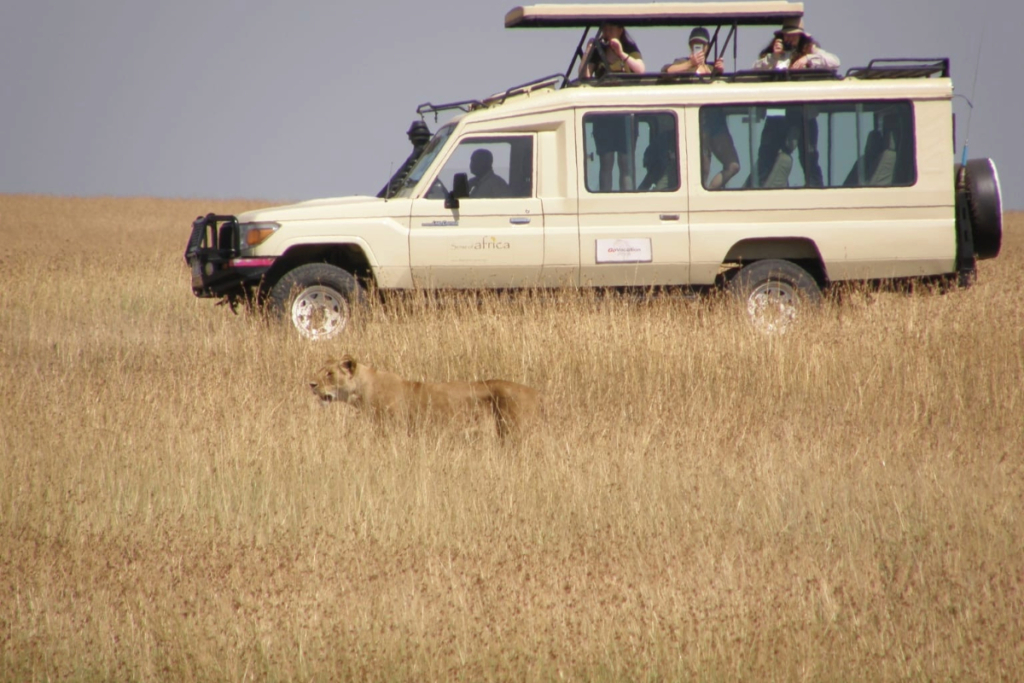
Inside national parks, travellers explore in 4×4 safari vehicles with experienced guides. A knowledgeable guide transforms the safari experience. They read animal behaviour, track wildlife movements, and interpret the ecosystem in ways visitors might otherwise miss.
Train Travel
Kenya’s Madaraka Express train connects Nairobi and Mombasa in about five hours. The journey even passes through sections of Tsavo National Park, where passengers occasionally spot elephants or giraffes from the windows.
Choosing the Right Safari Park
Kenya offers several exceptional safari destinations, each with its own character.
Maasai Mara. Best for classic savannah landscapes and big cats.
Amboseli. Known for its elephant herds and views of Mount Kilimanjaro.
Lake Nakuru. Famous for rhinos and birdlife.
Samburu. More remote and home to northern species such as Grevy’s zebra and reticulated giraffe. For a first trip, one or two parks is usually enough to create a rewarding safari experience.
Common Mistakes Travellers Make When Planning Kenya

After years of seeing visitors plan their first trips, a few mistakes appear again and again.
Trying to visit too many parks. Each destination deserves time. Two or three parks are usually enough for a first journey.
Underestimating travel distances. Kenya is larger than many travellers expect. Even short distances on a map can take several hours to travel.
Skipping Nairobi. Spending even one day in the capital adds cultural context to the journey.
Booking too few safari nights. Three nights in a safari park allows travellers to relax into the experience rather than rushing through it.
When Is the Best Time to Visit Kenya?
Kenya is a year-round destination, but certain seasons offer specific advantages.
July to October. Peak safari season and the time when the Great Migration moves through the Maasai Mara.
January to March. Dry conditions and excellent wildlife viewing.
April to May. Rainy season, fewer tourists, and lush green landscapes.
So, How Many Days Do You Really Need in Kenya?
If you want a simple guideline:
7 days — a focused safari introduction
10 days — safari and coast combination
14 days — a deeper exploration of Kenya
But speaking as someone who grew up there, the real answer is simpler. Kenya is not a destination that reveals itself quickly. It unfolds slowly — in the stillness of early morning plains, in the rhythm of coastal towns shaped by centuries of trade, and in the quiet moments between game drives when the vast landscape stretches endlessly beyond the horizon.
Give it time, and Kenya has a way of staying with you long after the journey ends.
FAQ: Planning Your First Trip to Kenya
Is 7 days enough in Kenya?
Yes, seven days is enough for a focused safari experience, particularly in the Maasai Mara.
Is 10 days enough for safari and beach in Kenya?
Yes. Ten days allows travellers to combine a safari with several relaxing days on the Kenyan coast.
Is Kenya good for a two-week trip?
Two weeks is ideal for experiencing safari parks, cities, and coastal destinations at a relaxed pace.
If Kenya has been quietly sitting on your travel list, consider this your sign to move it to the top.
And if you are planning your first journey, start with one simple question: