With its monumental sculptures, extravagant interiors and fashionable clientele, Bacchanalia has mastered the art of making an impression. Its cooking, however, is considerably less convincing.
There are restaurants you visit because you’ve heard wonderful things about the food, and others you visit because you’ve seen enough photographs to feel that you’re missing out on something. Bacchanalia, on London’s fashionable Mount Street, belongs rather comfortably to the latter category.
I’d wanted to visit for some time. Its reputation for extravagance precedes it, and in a city where restaurants increasingly compete for attention as much as culinary recognition, Bacchanalia has certainly mastered the art of being noticed.
Four of us arrived for our 5pm dinner reservation, early enough to find the dining room relatively quiet. There was something rather pleasant about seeing the restaurant before the evening crowd descended, although it also meant that the atmosphere initially lacked the energy one might expect from such an exuberant setting. That changed as the evening progressed, with more tables filling and the room gradually coming into its own.
Inside Bacchanalia’s Extravagant Interiors
Whatever one’s opinion of Bacchanalia’s food, its interiors deserve recognition. The restaurant is unapologetically extravagant, with monumental sculptures suspended overhead, classical references throughout and a level of decorative ambition that makes minimalism seem positively unfashionable.
Designed by Martin Brudnizki Design Studio, with dramatic artworks by Damien Hirst, Bacchanalia draws inspiration from the grandeur of ancient Greece and Rome. The result is a dining room that feels closer to an elaborate theatrical production than a conventional restaurant, where almost every detail has been considered for maximum visual impact.
Even the bathrooms deserve a mention, beautifully designed and wonderfully indulgent in a way that makes them feel like an extension of the restaurant’s identity rather than a practical afterthought.
Later in the evening, we made our way to Apollo’s Muse, the restaurant’s opulent private dining space, which proved to be another visual triumph. Filled with rich decorative details and an atmosphere that invites you to linger, it was particularly popular with my friend Yuliia, who could barely resist photographing every corner.
Bacchanalia understands its audience. In an age when a restaurant’s visual identity can travel further than its menu, every corner seems designed to leave an impression. You could spend an evening here photographing the surroundings and leave with enough content for a week, although whether the food is equally memorable is another matter.
Beautiful Plates, Uneven Starters
We decided to order several dishes to share, giving us an opportunity to explore different parts of the menu. The presentation was consistently attractive, and there was certainly no shortage of ambition, yet the food itself proved rather more inconsistent than the surroundings suggested.
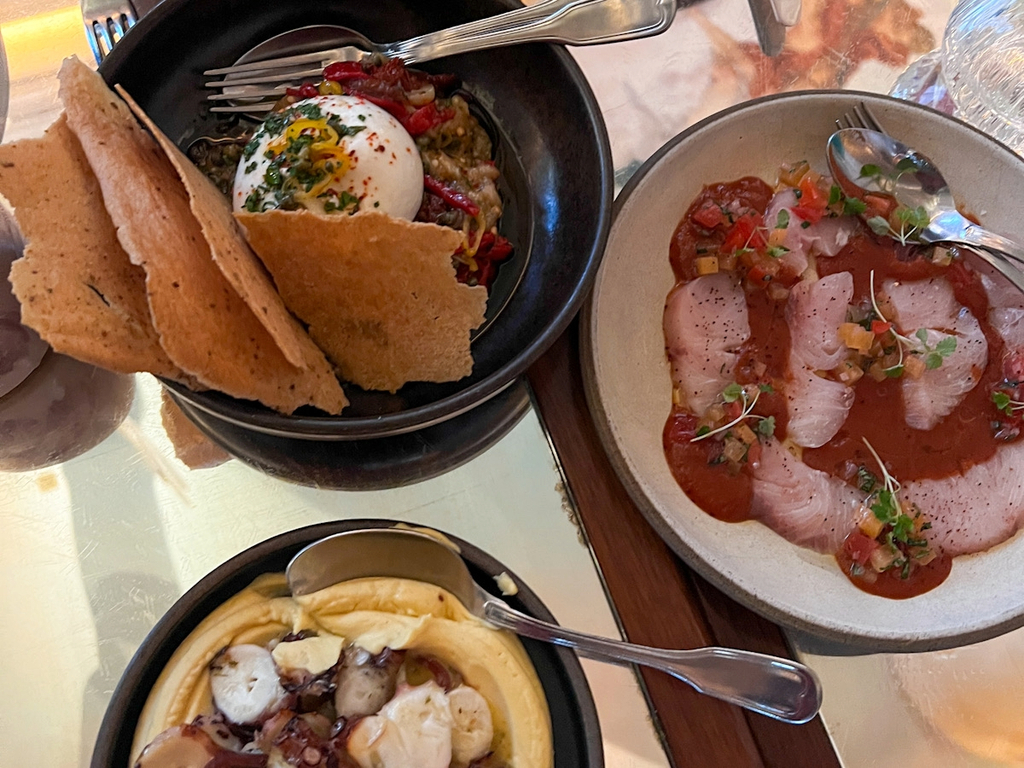
The first surprise came from the grilled octopus, a dish I had initially approached with some scepticism but which turned out to be the standout of our starters and one of the most enjoyable plates of the evening. The burrata was another success, delicious and satisfying in exactly the way one hopes when ordering such a familiar dish at a restaurant of this calibre.
The yellowtail (£26.25), unfortunately, was a different story. Served with tomato vinaigrette, cantaloupe melon relish and lemon balm, it sounded like an interesting combination of delicate flavours, sweetness and acidity. I had particularly high expectations, having enjoyed excellent yellowtail dishes elsewhere, but what arrived was beautifully presented and disappointingly subdued. The seasoning lacked the definition needed to bring those ingredients together, leaving the fish tasting rather flat, which was especially disappointing given the price and the promise of the accompanying ingredients.
There is something particularly frustrating about a dish that looks so promising but offers so little excitement once you taste it, and unfortunately, that feeling would return during the main courses.
The Primi / Main Courses
For our main courses, we continued sharing, ordering lobster paccheri pasta, truffle tagliatelle, mushroom risotto and chicken, all of which arrived with the attractive presentation that Bacchanalia clearly considers an essential part of its dining experience.
The lobster pasta came with an element of tableside theatre, which I genuinely enjoyed because there is something lovely about watching a dish receive its finishing touches in front of you, particularly when the presentation adds a sense of occasion to the meal.
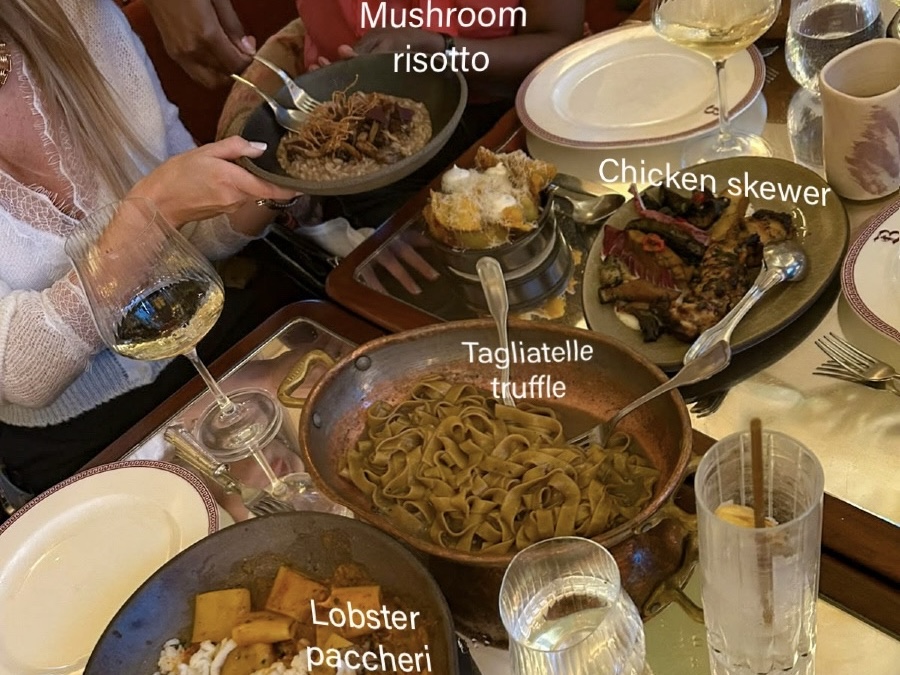
Unfortunately, the flavour did not quite deliver on the anticipation. At £68 for an individual portion, expectations are understandably high, particularly when the menu promises black truffle and a creamy lobster bisque sauce. I had anticipated something richer and more luxurious, with the depth of flavour one associates with a well-made bisque, but instead found the sauce surprisingly underwhelming and lacking the intensity needed to make the lobster truly shine. The paccheri was also firmer than I personally enjoy, and although I appreciate that pasta should retain a bite, there is a difference between pleasantly al dente and a texture that begins to distract from the dish.
The truffle tagliatelle was another disappointment, although for a different reason. We had been particularly excited about ordering it, but the dominant impression was mushroom rather than truffle, which seemed rather unfortunate for a dish built around such a distinctive ingredient. There is nothing inherently wrong with a mushroom-forward pasta, but when truffle is the attraction, I expect its character to make a stronger appearance rather than disappear behind the other flavours.
The mushroom risotto (£38.25) was pleasant enough, although with 36-month-aged Parmesan, porcini butter and Saba vinegar listed among its ingredients, I had expected considerably more character. These are ingredients capable of bringing richness, depth and complexity to a risotto, yet the finished dish was surprisingly unremarkable and offered little to distinguish it from considerably less expensive alternatives.
Then came the chicken skewer (£39.75), which was easily my least favourite main course, although the grilled oyster mushrooms accompanying it were excellent and arguably more enjoyable than the chicken itself. When a relatively simple chicken dish approaches £40, you expect the principal ingredient to command your attention rather than be overshadowed by its accompaniment.
By this point, a pattern had begun to emerge. The food was attractive, the presentation carefully considered and the experience undeniably theatrical, but the flavours rarely matched the anticipation created around them, which felt like a missed opportunity for a restaurant that makes such an extraordinary first impression.
Attentive Service, Poor Communication
Working in hospitality has made me particularly conscious of the details that shape a guest’s experience, from the way a table is approached to how orders are managed and whether the different members of a service team appear to understand what is happening around them.
At Bacchanalia, one small but repeated incident stood out, not because it was particularly serious, but because it revealed a lack of communication that should be avoidable in a restaurant operating at this level.
We had ordered wine alongside our aperitif cocktails, and the wine was being chilled while we enjoyed our drinks. Yet throughout this period, different members of staff repeatedly approached our table to ask whether we wanted to order wine, sometimes while attempting to clear the wine glasses already set on the table.
Once or twice, this might have been an innocent misunderstanding, but after several interruptions, it became rather irritating, particularly because the information should already have been available to the people responsible for looking after us.
The issue wasn’t that the staff were inattentive, because there appeared to be plenty of people looking after the table. What seemed to be missing was communication between them, something that becomes especially noticeable when several members of a team are involved in delivering the same service.
A well-coordinated service team should know when guests have already ordered wine, particularly when the bottles are waiting to be served, rather than requiring diners to repeat the same information to different people throughout the meal.
This is where I think the distinction between attention and good service becomes important. Having several people approach your table doesn’t necessarily mean you’re receiving better hospitality, and sometimes the most polished service is the kind that anticipates what you need without constantly interrupting you.
At a restaurant where so much thought has clearly gone into the presentation of the experience, these details matter because genuine luxury is as much about how effortlessly things happen as it is about how impressive they look.
A Sweet Ending, With One Exception
Dessert brought the evening back on a happier note, with most of what we ordered proving excellent and providing some of the enjoyment I had hoped to find more consistently throughout the savoury courses.
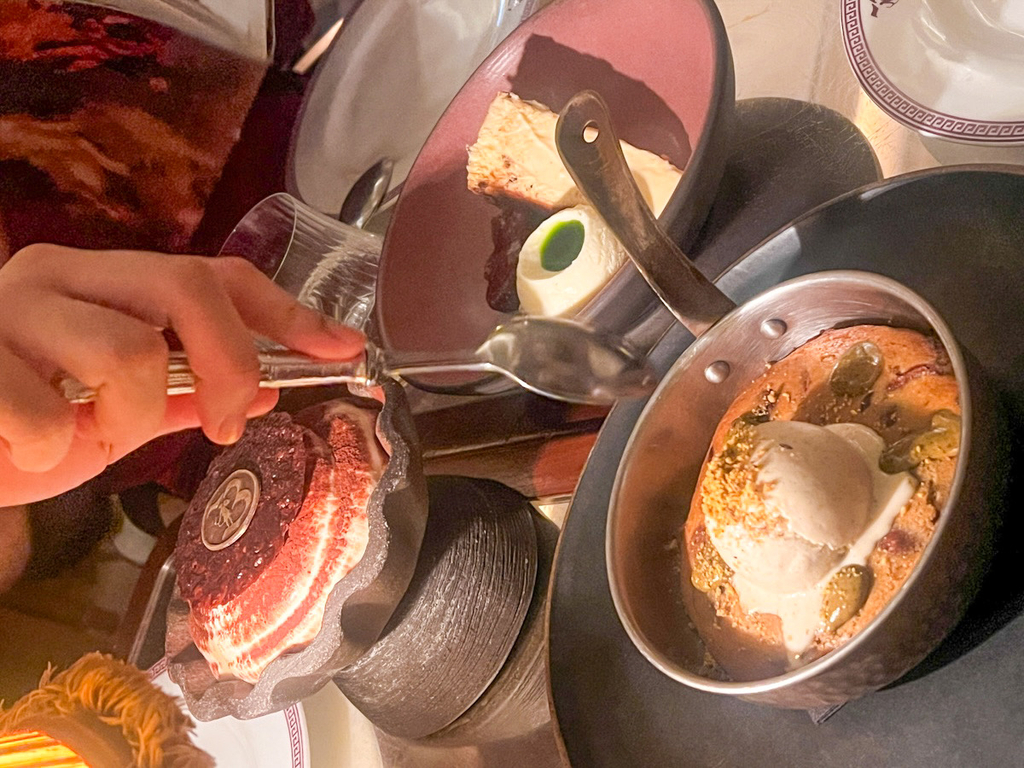
The tiramisu, however, was another matter, particularly because I have fairly strong feelings about a dessert that relies on the familiar balance of coffee, mascarpone and sponge to achieve something so satisfying.
Bacchanalia’s interpretation simply didn’t work for me, and while I appreciate that restaurants want to put their own stamp on familiar dishes, reinvention should offer something compelling in return. There is nothing wrong with creativity, but sometimes a classic is best left alone unless the alternative genuinely improves upon it.
Is Bacchanalia Worth the Money?
Leaving Bacchanalia, I found myself thinking less about individual dishes and more about the experience as a whole, particularly the extent to which the restaurant’s appeal depends on everything surrounding the food.
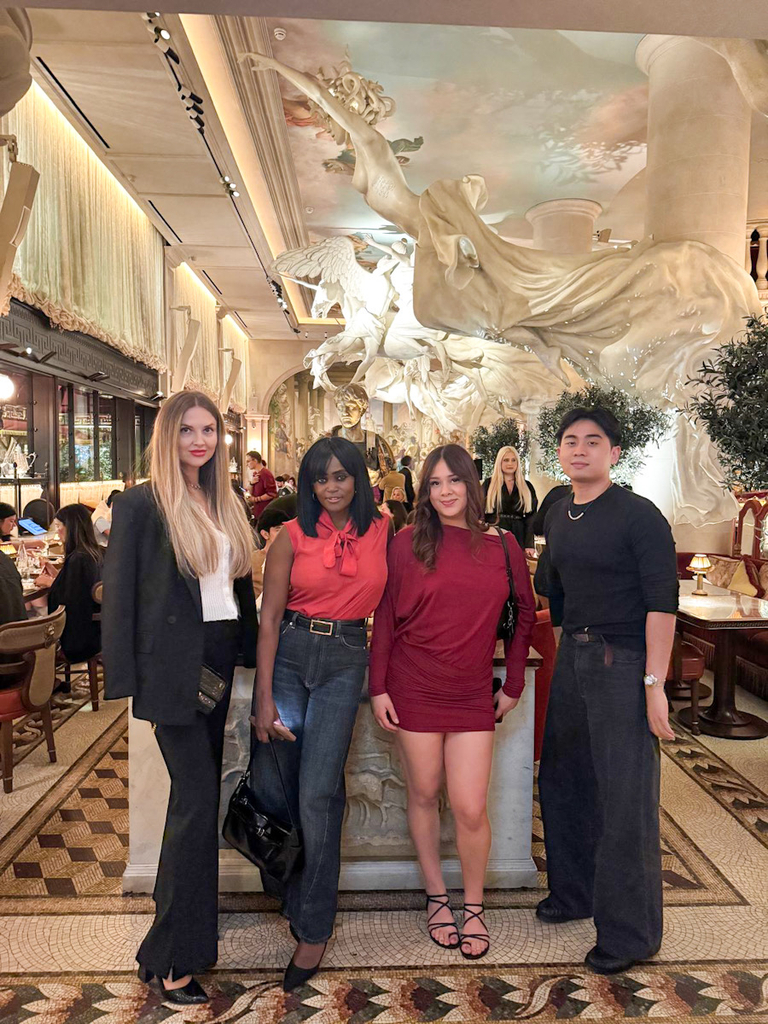
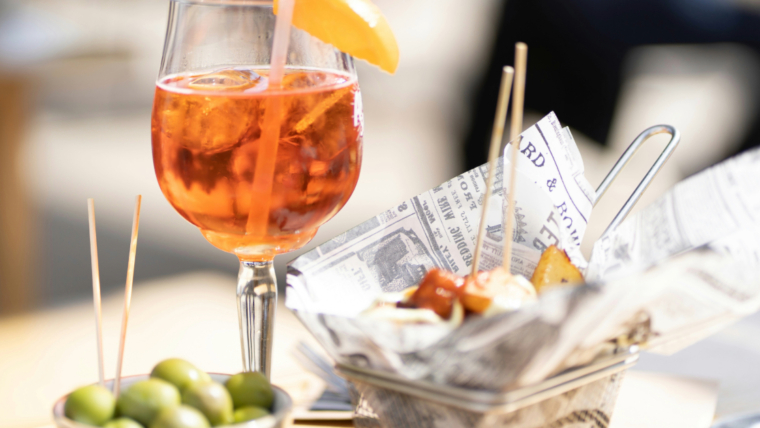
There is no denying that this is an impressive restaurant. The interiors are extraordinary, the cocktails are beautifully presented, and the theatrical touches make the evening feel like an occasion, while the setting itself is wonderful for dressing up, spending time with friends and enjoying the more flamboyant side of London’s dining scene.
But I couldn’t escape the feeling that much of what you’re paying for is the address, the surroundings and the privilege of being part of the spectacle, rather than a particularly memorable culinary experience.
Perhaps that’s perfectly acceptable, provided you know what you’re going for, because not every restaurant needs to be a culinary revelation. Sometimes people want a glamorous night out, a beautiful room, a good cocktail and somewhere that feels exciting to be seen, and Bacchanalia caters to that desire exceptionally well.
What I find harder to reconcile is the gap between the ambition of the setting and the inconsistency of the food. When a restaurant creates such high expectations through its design, reputation and pricing, the kitchen needs to give guests something equally compelling to remember.
Would I recommend Bacchanalia? Yes, particularly to someone who appreciates extravagant interiors and wants to experience one of Mayfair’s most visually distinctive restaurants, because there is genuine pleasure to be found in its theatricality and sense of occasion.
Would I return enthusiastically for the food? Probably not, despite having enjoyed the company, appreciated the design and discovered a wonderful octopus dish among the culinary disappointments.
Bacchanalia is one of those places that, once you’ve experienced it, you may feel perfectly content to move on from, having satisfied the curiosity that brought you there in the first place.
For me, that curiosity has now been satisfied, and while I’m glad I finally visited, I don’t feel any particular urgency to return.
Next!