Bitter chicory, crisp fennel, sweet orange and green olives come together in this colourful winter salad, finished with fresh dill and a lightly sweetened citrus dressing.
Winter has a habit of turning our attention towards richer, more comforting dishes. Root vegetables go into the oven, soups return to the menu, and salads gradually disappear from the table until warmer months arrive. Yet some of the season’s most interesting ingredients are better enjoyed raw, bringing freshness and a welcome contrast to all that winter indulgence.
Take chicory and fennel, for instance. Neither is particularly showy at the supermarket, and chicory’s slightly bitter reputation hardly makes it an obvious crowd-pleaser. Pair the two with sweet, juicy orange, a few green olives and fresh dill, however, and something rather interesting happens. The bitterness becomes appealing, the fennel adds texture and the citrus brings everything into balance.
This chicory, fennel and orange salad requires no cooking and takes around 20 minutes to prepare. It works as an elegant starter, a light lunch or a refreshing accompaniment to something richer.
Why Chicory, Fennel and Orange Work So Well Together
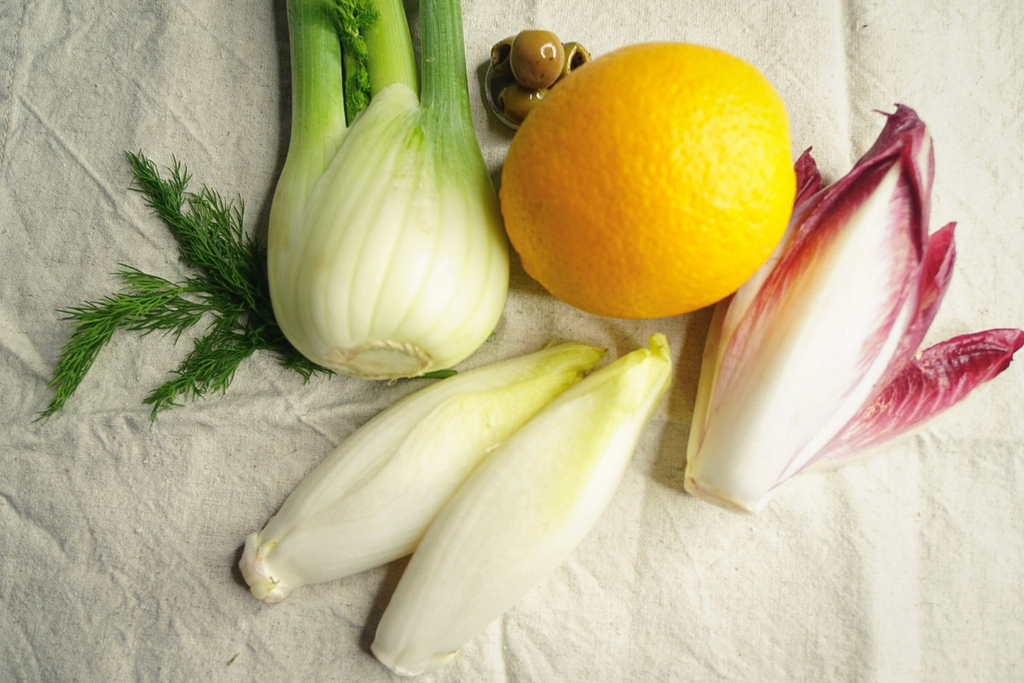
A good salad relies on contrasting flavours and textures, not simply an assortment of vegetables. Chicory provides a distinctive, pleasant bitterness and a satisfying crunch. The red variety contributes deep burgundy tones, while white chicory offers a paler, more delicate contrast.
Fennel introduces its subtle aniseed character. Shaved into thin ribbons, the bulb becomes almost translucent while retaining a crisp bite. The orange softens the sharper notes of the chicory, green olives add a savoury accent, and fresh dill reinforces the fennel’s aromatic freshness. The dressing needs to do very little beyond bringing these flavours together.
There is a practical reason for keeping that citrus brightness. Acidity makes a rich mouthful feel less heavy by stimulating salivation and refreshing the palate; it also provides contrast to buttery sauces and roasted meats. This is why a salad like this makes more sense as a starter before an indulgent main course, or as a side beside one, rather than being lost among several equally delicate dishes.
THE RECIPE
Chicory, Fennel and Orange Salad Recipe
PREP: 20 MINUTES COOK: NONE SERVES: 2
Difficulty: Easy
Ingredients
For the salad:
- 1 head of red chicory
- 1–2 heads of white chicory
- 1 medium fennel bulb
- 1 large sweet orange
- 8–10 green olives, preferably pitted
- A few sprigs of fresh dill
- Flaky sea salt and freshly ground black pepper
For the citrus dressing:
- 3 tablespoons extra-virgin olive oil
- 1 tablespoon freshly squeezed orange juice
- 1 tablespoon freshly squeezed lemon juice
- ½ teaspoon finely grated orange zest
- ½–1 teaspoon runny honey, to taste
- A pinch of sea salt and freshly ground black pepper
How to Make Chicory, Fennel and Orange Salad
1. Prepare the Chicory
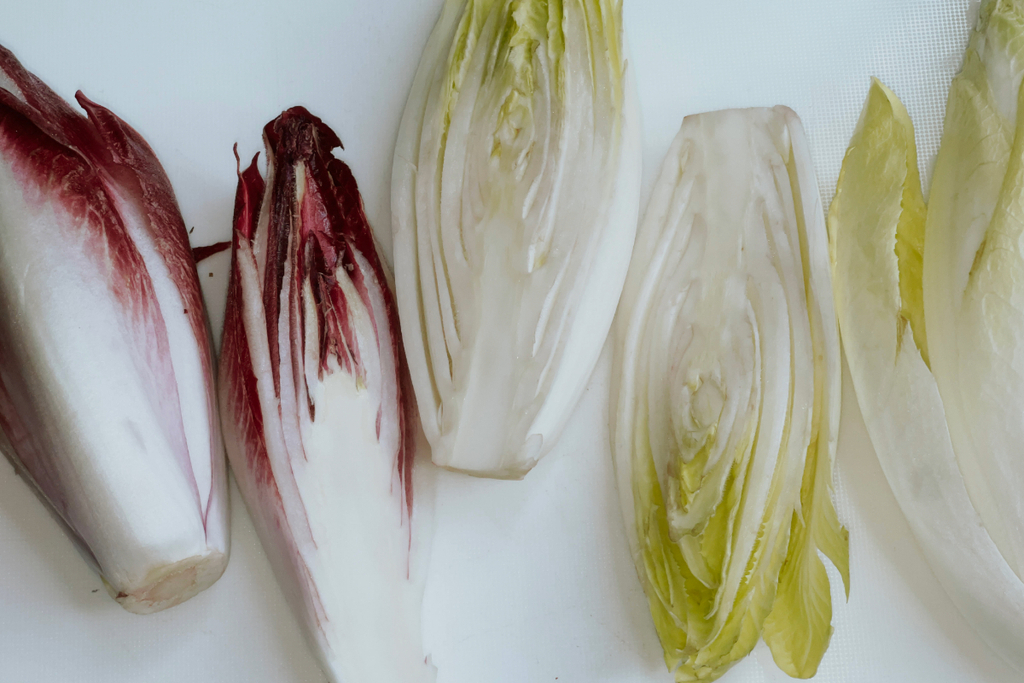
Trim the base of each chicory head and carefully separate the leaves. Set aside the most attractive whole leaves to give the finished salad its structure, and slice larger leaves lengthways if necessary.
Wash gently and dry thoroughly, as lingering water will dilute the dressing and soften the texture. Keeping several pointed leaves intact also makes it easier to arrange the salad attractively without requiring complicated plating techniques.
2. Shave the Fennel into Thin Ribbons
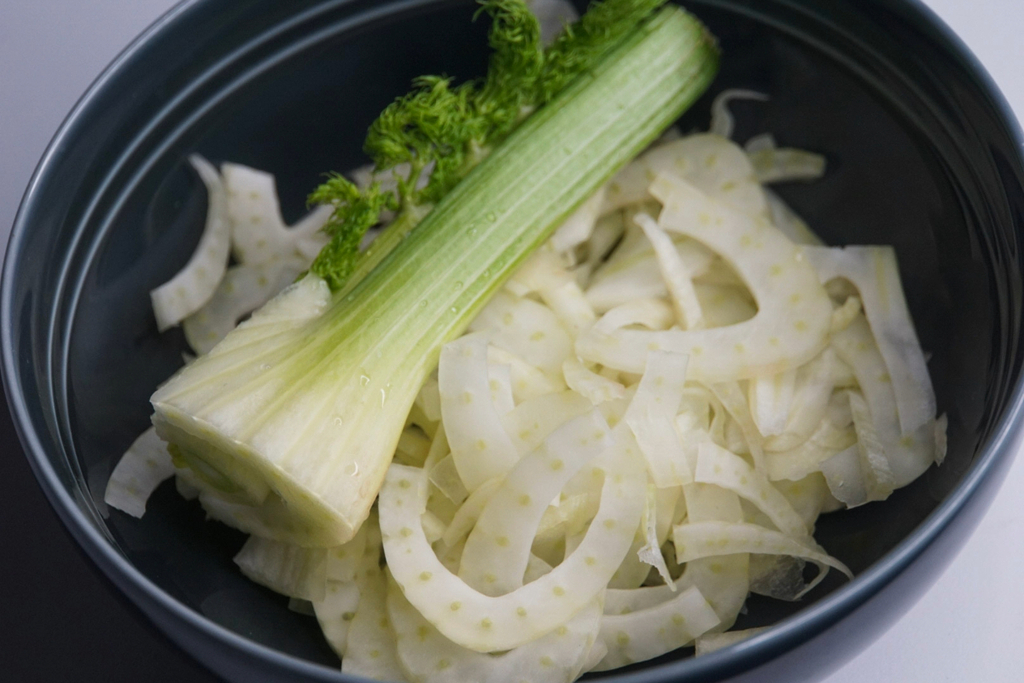
Remove the fennel stalks, reserving any delicate fronds. Trim the base and cut the bulb in half lengthways. Using a mandoline or sharp knife, shave the bulb into thin slices, working carefully around the tough central core.
The thinner the ribbons, the more delicately they combine with the chicory and dressing. Thinly sliced fennel also has a gentler aniseed flavour, making it particularly appealing to anyone who finds the flavour of raw fennel too pronounced.
A little kitchen tip: Keep the fennel slices very thin and resist the temptation to chop them into small pieces. Their naturally curved shape creates the height and texture that make this salad so attractive.
3. Prepare the Orange

Remove the orange peel and white pith, then separate the fruit into segments. For a more refined finish, use a sharp knife to cut between the membranes, catching any juice in a bowl.
The orange should provide bursts of sweetness without overwhelming the bitter chicory. Removing the membranes also gives the segments a more delicate texture, allowing them to combine comfortably with the thin fennel ribbons.
Reserve a little of the juice for the citrus dressing.
4. Whisk Together the Citrus Dressing
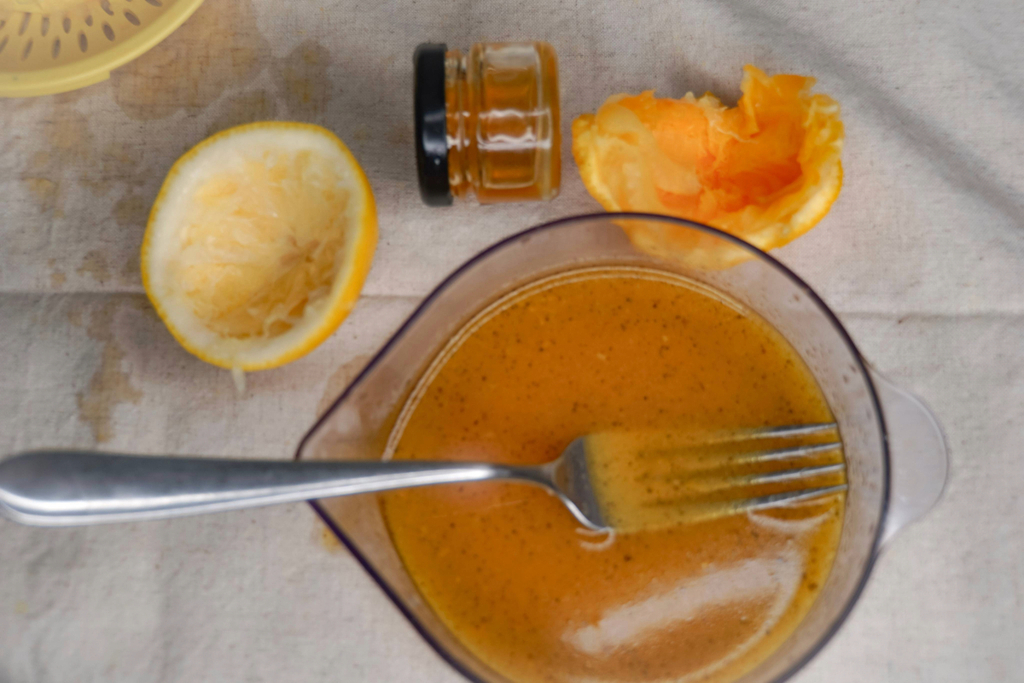
Whisk the olive oil, orange juice, lemon juice and orange zest together, then season with salt and pepper.
I prefer this dressing with a little less citrus sharpness, so I added a touch of honey to round out the acidity. It does not need to taste sweet: the honey simply softens the sharper lemon notes, allowing the fennel, chicory and orange to remain distinct.
Start with half a teaspoon, taste and add a little more only if needed. Depending on the sweetness of your orange, you may find that a small amount is sufficient.
A little kitchen tip: Taste the dressing with a chicory leaf rather than from the spoon alone. The bitterness changes how you perceive the vinaigrette, and what seems sharp on its own may taste beautifully balanced with the salad.
5. Arrange the Salad
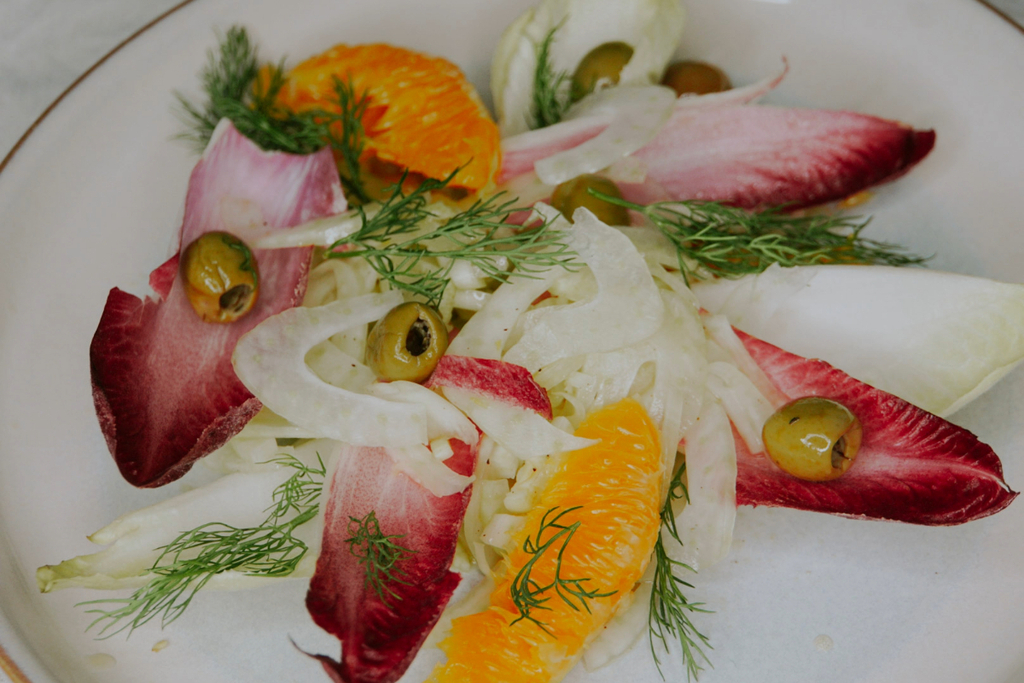
Choose a wide, shallow serving bowl. Arrange the red and white chicory leaves around the plate, allowing the pointed ends to face in different directions.
Loosely pile the shaved fennel in the centre, then tuck the orange segments between the ribbons. Scatter the green olives throughout, letting some sit inside the chicory leaves and others among the fennel.
The aim is to keep the ingredients loosely arranged rather than tightly packed. This allows the different colours and textures to remain visible while making the salad easier to serve.
6. Dress and Finish
Drizzle the citrus dressing lightly over the assembled salad, adding only as much as you need. Finish with small sprigs of dill, any reserved fennel fronds and freshly ground black pepper.
Taste before adding more salt, as the olives already contribute salinity. Serve immediately while the chicory and fennel are crisp.
A little kitchen tip: Don’t toss the salad too vigorously. Dressing the ingredients after arranging them preserves the delicate fennel curls and pointed chicory leaves.
What to Serve with This Winter Salad
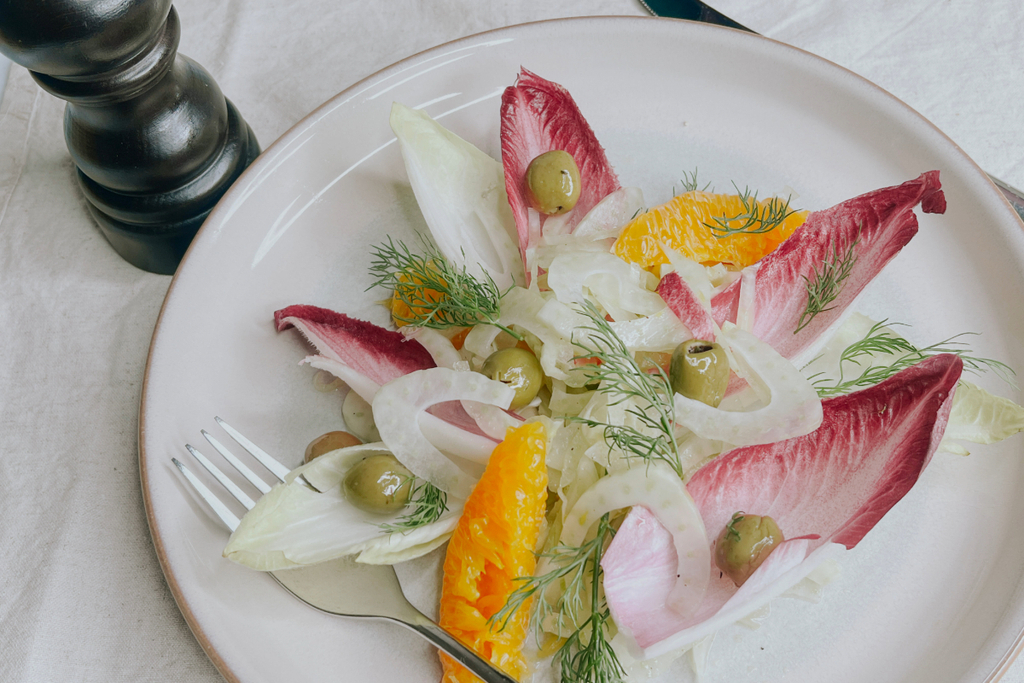
I would serve this salad either as a starter before a substantial main course or alongside something rich. The orange and lemon bring acidity that refreshes the palate between bites of buttery, fatty or slow-cooked food.
Think roast pork with crisp crackling, chicken with a creamy sauce or a rich roast with potatoes. The contrast is the point: the salad provides freshness where the main course provides depth. While acidity does not literally break down fat on the palate, its refreshing quality can make richer dishes feel more balanced and enjoyable.
It also earns its place on the festive table. Alongside roasted meats, buttery potatoes and rich gravies, a crisp, citrus-led side dish provides contrast without adding yet another heavy accompaniment.
If serving the salad first, keep the portion modest so the following course still feels like the main event. A small, carefully composed serving is often enough to introduce fresh flavours before a more substantial dish.
What Wine Works with a Citrusy Starter?
Wine is worth thinking about when planning the sequence of a meal. Citrus and bitter chicory can make a strongly tannic red taste harder or more astringent, so I would not automatically pour the big red reserved for the main course with this salad.
A crisp but textured white, such as Vermentino, or a dry Riesling with good acidity, is a more natural match. Both have enough freshness to meet the citrus without flattening the fennel. Vermentino’s subtle herbal and sometimes saline qualities can also work particularly well with the green olives and dill.
If the main course calls for a full-bodied red, let the salad open the meal and introduce the red with the richer dish. A structured Cabernet Sauvignon, for example, is better suited to a substantial beef dish than to a delicate citrus salad.
For a fuller-bodied white, choose one that retains lively acidity rather than an especially buttery, heavily oaked style. A balanced Chardonnay with restrained oak and sufficient freshness can work, particularly if the following course features roast chicken or a creamy sauce.
It is a small decision, but thinking about how the courses and wines progress makes the whole meal feel more considered. The aim is not necessarily to match one wine to every dish, but to allow each course to complement what comes before and after it.
Can You Make Chicory and Fennel Salad Ahead?
You can prepare several elements in advance, but leave assembly until just before serving.
Wash and dry the chicory leaves, then refrigerate them in an airtight container lined with kitchen paper. Make the dressing separately, chilling it if preparing ahead and whisking again before use.
Shave the fennel as close to serving as possible to preserve its colour and crunch. The orange segments can be prepared a few hours ahead and stored in a covered container.
Keep the ingredients separate until you are ready to plate, and add the dressing at the last moment. This prevents the chicory from becoming limp and helps the fennel retain its delicate texture.
Frequently Asked Questions
Can You Eat Chicory Raw?
Yes. Raw chicory has a crisp texture and a pleasantly bitter flavour. Pair it with sweet or acidic ingredients, such as orange, pear or a citrus dressing, to balance its character.
How Do You Make Chicory Taste Less Bitter?
Choose fresh, firm leaves and pair them with naturally sweet ingredients. The orange segments in this recipe soften the bitterness without disguising it. White chicory may also taste milder than some red varieties.
Can You Eat Fennel Raw in a Salad?
Absolutely. Raw fennel is crisp and aromatic. Shaving it thinly is the key to making it pleasant to eat with other delicate salad ingredients.
Which Oranges Work Best?
Sweet navel oranges are a reliable choice, while blood oranges make a beautiful seasonal variation when available. Choose fruit that is juicy but firm enough to hold its shape.
Can I Make the Dressing Less Citrusy?
Yes. Start by reducing the lemon juice slightly or adding a little more olive oil. A small amount of honey can also soften the perception of acidity without making the dressing noticeably sweet. Taste with a chicory leaf before adjusting further.
A Different Way to Think About Winter Salads
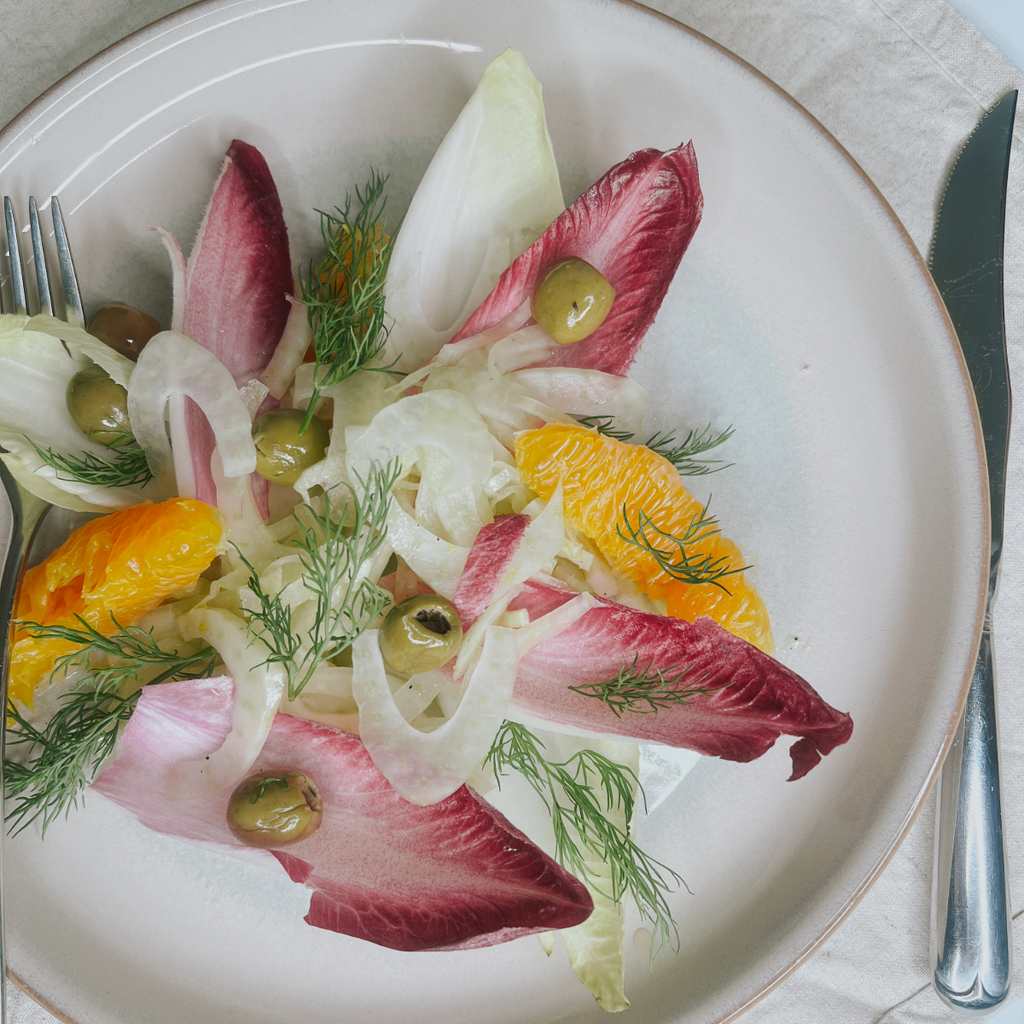
Winter cooking doesn’t need to revolve entirely around roasting and slow simmering. Chicory, fennel and citrus are at their best when their contrasting flavours and textures have room to speak for themselves.
This salad asks for little more than careful slicing, a balanced dressing and a few minutes of attention to the plate. But understanding how the ingredients interact makes it easier to adapt the recipe, whether that means adjusting the acidity, choosing a suitable main course or deciding which wine to pour.
Sometimes the most effective approach is not to add more ingredients, but to recognise what each one is already bringing to the table.
Read More On ChicChui
If you enjoy cooking with fresh ingredients and finding new ways to make everyday meals more interesting, explore these recipes:
Read More On ChicChui
For more seasonal recipes and cooking inspiration, browse Chic Chui’s Recipes & Cooking collection.
Have you tried combining bitter leaves with sweet citrus? Share your favourite winter salad combinations in the comments, and explore more seasonal cooking ideas on Chic Chui.