


Ten days, four Italian regions and a suitcase filled with familiar favourites. Somewhere between Rome’s warm afternoons and Tuscany’s cooler hills, I discovered that dressing well for autumn travel has less to do with what you pack than how you wear it.
An upcoming trip to Italy has a way of making even a well-stocked wardrobe feel inadequate. Clothes that serve you perfectly well at home can suddenly seem less inspiring when you begin imagining long lunches, afternoons among the vineyards, walks through historic streets and evenings that call for a little more polish. Before long, you’re browsing for another jacket or pair of shoes, convinced that the right holiday wardrobe requires a few more purchases.
I know the temptation. Part of the pleasure of travelling is imagining what you’ll wear, particularly when the destination offers such a beautiful backdrop. Yet my recent trip through Rome, Tuscany, Brescia and Le Marche reminded me that dressing well in Italy doesn’t necessarily require an entirely new wardrobe. In fact, some of the most successful outfits are often built around familiar pieces, styled thoughtfully and adapted to the places you’re visiting.
There’s also a practical consideration that tends to get overlooked when holiday shopping becomes part of the excitement. Every additional purchase takes up suitcase space, adds another decision to the packing process and, occasionally, becomes something you never wear. A more considered approach is to begin with what you already own, identify the pieces that genuinely suit your itinerary and explore how different combinations can give familiar clothes a new lease of life.
That is the thinking behind an anti-haul capsule wardrobe. It isn’t about depriving yourself of lovely things or adopting minimalism for the sake of it; rather, it’s about questioning the assumption that every holiday requires a fresh collection of clothes.
What to Wear in Italy in Autumn: Start With the Weather
One of the more important lessons from travelling through Italy in autumn is that you shouldn’t assume the weather will be consistent simply because you’re visiting during the same season. Temperatures and conditions can vary considerably between destinations, and even within a single region, which makes a little research far more useful than packing according to the calendar.
During our trip, central Rome was the hottest part of the itinerary, making lighter dressing far more appropriate during the day. My combination of white high-waisted cropped jeans and a black sleeveless top was particularly suited to the warmer conditions, while a cream knit provided an additional layer when needed.
The countryside brought a different experience, particularly at the wine estates in Le Marche, where the days could be beautifully sunny and warm but the weather was less predictable. We experienced rain on one day and sunshine on another, which made having a few adaptable layers considerably more useful than packing exclusively for either warm or cold conditions.
This is worth considering when planning what to pack for Italy in autumn, especially if your itinerary includes several regions. A day exploring Rome has different demands from an afternoon at a vineyard, where you might spend considerable time outdoors. Checking the forecast for each destination, rather than relying on a general search for Italian autumn weather, will give you a much better idea of what belongs in your suitcase.
The aim isn’t to anticipate every possible weather change, but to choose clothes that can accommodate a reasonable amount of variation without requiring a completely different outfit for every destination.
What to Pack for Italy in Autumn: The Anti-Haul Capsule List
A useful autumn capsule wardrobe begins with versatile pieces rather than an extensive shopping list. Ideally, you want clothes that complement one another, work across different settings and allow you to adjust your outfit as temperatures change throughout the day.
An outer layer is a sensible starting point, particularly if you’re travelling between cities and countryside destinations. A trench coat, for example, can provide some protection against light rain while adding structure to an otherwise simple outfit. It is also considerably easier to style across different occasions than a bulky coat that only works with certain combinations.
A warm layer is equally useful, although this doesn’t necessarily mean packing several heavy sweaters. A fine knit, cardigan or longer sweater can be worn independently or layered over lighter pieces when temperatures drop. The key is choosing something that works with the trousers, jeans and outerwear you already intend to bring.
I’d also make room for a tailored layer, such as a blazer, which can make everyday basics feel more considered without requiring much additional effort. It works particularly well for city exploring, lunch and evenings when you want to look a little more polished.
Lighter tops deserve their place in an autumn suitcase, too. As my experience in Rome demonstrated, warmer daytime temperatures can make sleeveless tops and lighter fabrics far more comfortable than the heavier knitwear we tend to associate with the season. A selection of versatile trousers or jeans will give you a reliable foundation, while accessories such as belts, scarves, sunglasses and jewellery can introduce enough variation to make familiar combinations feel different.
Footwear requires its own consideration, particularly if your itinerary involves extensive walking. Rather than choosing shoes based entirely on how they look, think about the distances you’ll cover, the surfaces you’ll encounter and whether each pair has a distinct purpose.
These are wardrobe categories rather than a prescription to purchase every item mentioned. Before adding anything to your shopping basket, take stock of what you already own and consider whether a piece you have worn countless times at home might work just as well on holiday.
Dressing for the City and the Countryside

A comfortable autumn outfit put together entirely from pieces I already owned.
The distinction between city and countryside dressing is worth considering when planning your outfits, although you don’t necessarily need separate wardrobes for each. A few thoughtful adjustments can make familiar pieces work across very different settings, particularly when your itinerary combines sightseeing, vineyard visits and leisurely meals.
In Rome, I opted for an outfit that was relatively simple but relied on accessories to bring everything together. I wore white high-waisted cropped jeans with a black sleeveless top, adding a burgundy-brown belt with a sculptural gold buckle and a cognac handbag. A black-and-cream scarf, angular sunglasses and gold jewellery completed the look, while a cream knit was available as an additional layer.
What I particularly liked about this combination was that none of the individual pieces required much effort to style. The interest came from the proportions, the contrast between the colours and the accessories, rather than an elaborate outfit built around several new purchases.
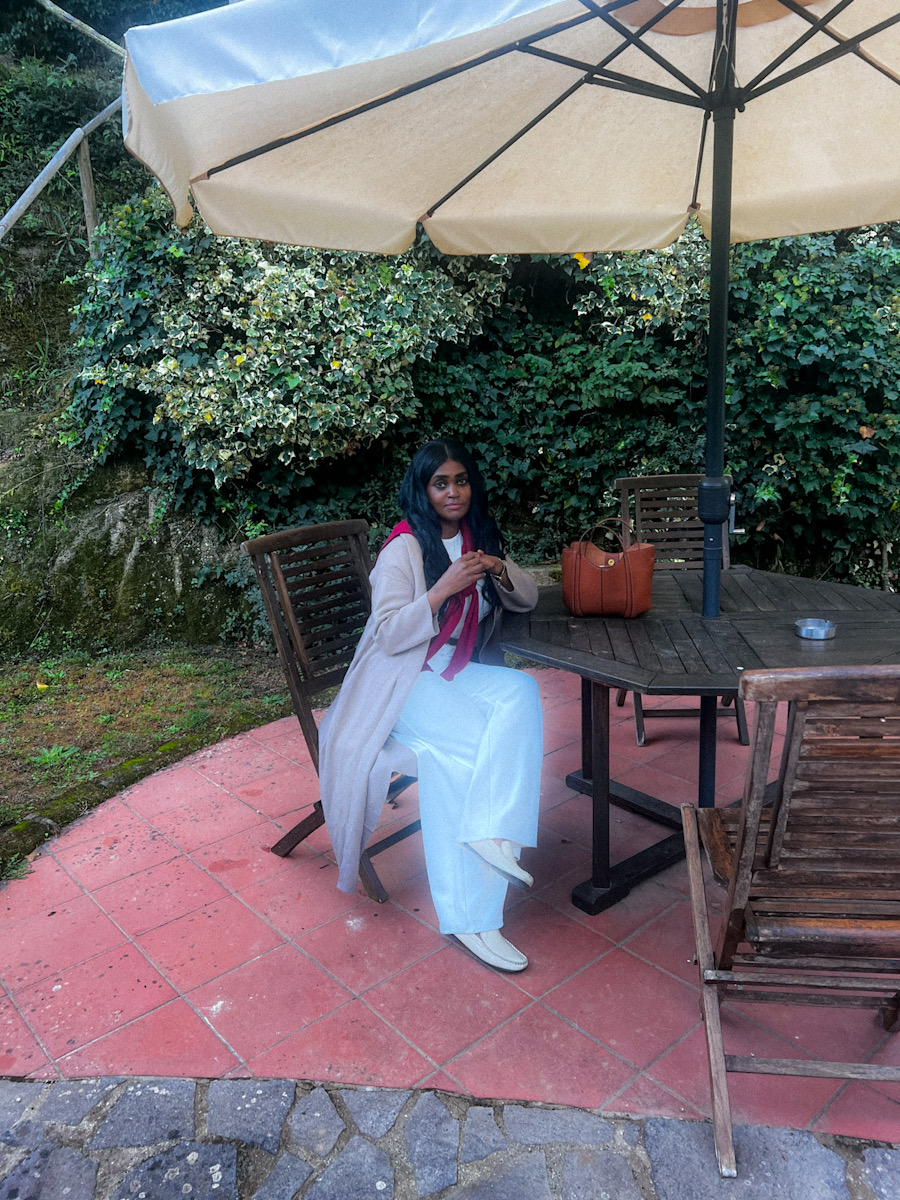
The countryside called for a little more flexibility, especially during our visits to the wine estates in Le Marche. With sunshine on some days and rain on others, having an outer layer that could be added or removed made more sense than committing to heavier clothing throughout the trip.
My army-green trench, brown long sweater and blazer offered different options without requiring an entirely separate wardrobe for every destination. The lesson was less about dressing differently for the countryside and more about understanding how to adapt the clothes I already had to the conditions around me.
The Footwear Reality: Style Has to Meet Practicality
Shoes can make or break a travel wardrobe, particularly in Italy, where a day of exploring can involve considerably more walking than you initially anticipate. Historic streets, uneven paving and cobblestones are not always particularly forgiving, so choosing footwear requires a little more thought than simply deciding which pairs look best with your outfits.
For this trip, I packed four pairs: chunky coffee-brown loafers and kitten-heel slingbacks from Zara, burgundy ballet flats from M&S, and cream flat loafers from Massimo Dutti. Not quite the three-shoe rule I wrote about previously, but each pair had its place, and I had different outfits in mind for them.
The kitten heels, for instance, worked beautifully with certain looks, particularly for dinners and wine tastings when I wanted a slightly dressier finish. They also came in handy when I wanted a particular photograph on the cobblestones. I’d slip them on for the picture, then change back into a more practical pair for walking longer distances.
It might sound a little indulgent, but there is a practical logic to it. You don’t necessarily have to sacrifice the outfit for the walk, or spend the entire day negotiating uneven streets in shoes that were never intended for that purpose. Sometimes, a simple change of footwear is all that’s needed to make both the photograph and the experience more enjoyable.
Of course, the other three pairs had to justify their place in the suitcase, too. When deciding how many shoes to pack, I think it’s worth considering whether each pair offers something different in terms of comfort, styling or occasion, rather than bringing several versions of essentially the same shoe.
My four pairs may not have been the most disciplined interpretation of my own three-shoe rule, but the experience reminded me that packing advice should serve the trip, rather than become another rule to follow blindly. You can read more about the thinking behind it in my earlier guide to the three-shoe rule for summer travel.
What About Visiting Churches in Italy?

Church visits are another practical consideration when deciding what to wear in Italy, particularly if your itinerary includes some of the country’s more significant religious sites. Certain churches and basilicas have dress requirements, commonly asking visitors to cover their shoulders and knees, although the specific rules can vary between locations.
This doesn’t mean you need to pack an entirely separate outfit for every visit. A lightweight scarf or an additional layer can help you adapt an otherwise suitable combination, making it easier to move between sightseeing, lunch and cultural visits without having to plan your wardrobe around every individual stop.
It’s worth checking the official visitor guidance for the specific church or religious site you intend to visit before travelling, rather than assuming the same rules apply everywhere. A little preparation can save you the inconvenience of arriving somewhere only to discover that your outfit isn’t appropriate for entry.
The Art of Making Familiar Clothes Look Different
One reason we sometimes buy more than we need for holidays is that we underestimate how much difference styling can make. It’s easy to assume that creating a fresh outfit requires a new item, when the answer may simply lie in combining existing pieces differently.
A belt can introduce definition to an otherwise relaxed silhouette, while a scarf can bring colour, texture or interest to a simple combination. Jewellery adds another layer of personality, and changing your handbag can alter the overall impression without requiring you to rethink the entire outfit.
My Rome look was a good example of this. The individual pieces were relatively straightforward, but the sculptural belt, cognac handbag and contrasting scarf gave the combination a more considered finish. It was a reminder that the success of an outfit often comes down to how its elements work together, rather than how many new pieces have gone into creating it.
I’ve explored this idea further in Why Some Outfits Work Better Than Others: The Colour Mistakes You Don’t See, where colour, proportion and balance take centre stage. You might also enjoy revisiting The Ultimate Autumn Capsule Wardrobe With 13 Chic Pieces You’ll Actually Wear, particularly if you’re looking for more inspiration on building a versatile wardrobe.
Before buying anything specifically for a trip, try putting together combinations you haven’t worn before. You may discover that the outfit you’ve been searching for is already hanging in your wardrobe, waiting for a different styling approach.
The Five-Question Anti-Haul Wardrobe Audit
Before opening another shopping tab, take a little time to review your wardrobe and consider what you genuinely need for the trip. Rather than starting with a list of things to buy, begin by asking yourself a few questions about the clothes you already own.
1. Can I wear this in at least two different ways?
A versatile piece should work with more than one outfit, ideally across different settings. If it only matches a single item in your wardrobe, consider whether it deserves the space it will occupy in your suitcase.
2. Does it suit the places I’m visiting?
A vineyard, a historic city and a countryside restaurant can all have different practical demands. Think about your actual itinerary, including the activities you have planned, rather than choosing clothes exclusively for how they might look in photographs.
3. Can I layer it?
Autumn weather can change throughout the day, so pieces that work together offer considerably more flexibility than outfits that only make sense as complete combinations. A useful layer should be easy to add or remove without disrupting everything else you’re wearing.
4. Will I be comfortable wearing it for several hours?
Consider walking distances, the weather and the activities planned before deciding whether something belongs in your suitcase. An outfit might look wonderful when you leave the hotel, but if you’re uncomfortable after an hour of walking, it probably wasn’t the most practical choice.
5. Do I already own something that does the same job?

This is perhaps the most important question, particularly when you’re tempted by another blazer, knitwear purchase or pair of shoes. Before spending money, look at what you already have and consider whether you’re filling a genuine gap or simply buying another version of something you own.
The purpose of this exercise isn’t to create a minimalist wardrobe for its own sake, but to make more deliberate choices about what you pack and why. Once you start thinking in terms of versatility and practicality, it’s often surprising how much you can achieve with fewer, better-considered combinations.
So, Do You Really Need a New Wardrobe for Italy in Autumn?
My recent trip reminded me that dressing well in Italy has considerably less to do with buying an entirely new collection of clothes and more to do with understanding how to use what you already own. Central Rome was warm enough for lighter dressing, while the countryside brought sunshine, rain and changing temperatures that made adaptable layers far more useful than a suitcase filled exclusively with autumn knitwear.
That’s precisely why a considered capsule wardrobe works. It gives you enough flexibility to dress for different destinations and occasions without overwhelming your suitcase or leaving you with clothes that only work for one particular setting.
There’s nothing wrong with buying something special for a trip; I enjoy fashion far too much to suggest otherwise. However, there’s a difference between finding something you genuinely love and purchasing an entirely new wardrobe because the calendar says autumn. The latter can easily become an expensive exercise in preparing for a version of the holiday that may not reflect the reality of your itinerary.
Perhaps the most stylish thing you can do before your next Italian escape is shop your own wardrobe first, paying attention to the pieces that already work, the combinations you haven’t explored and the few practical gaps worth addressing.
You might be surprised by just how much you already have.
Follow My Instagram here

